
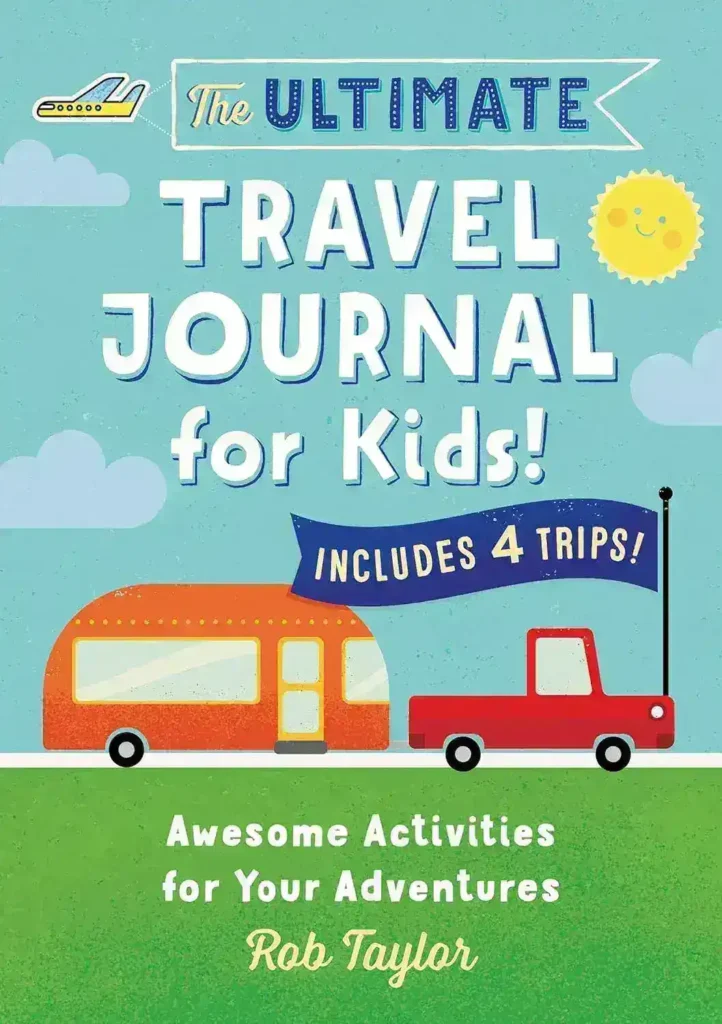
🚀 The Ultimate Travel Journal for Kids: Awesome Activities for Your Adventures – Full Review
Travel with children can be an incredible adventure, but it often comes with the perennial question: “Are we there yet?” Keeping young minds engaged, reflective, and entertained during transit and downtime is the secret to a successful family trip. This is where a high-quality, activity-packed resource like The Ultimate Travel Journal for Kids: Awesome Activities for Your Adventures comes into its own.
This comprehensive travel journal for kids is far more than just blank pages; it’s an interactive memory-making kit designed specifically for young travelers aged 6 to 9. It’s a purposeful tool to encourage kids to document their hopes, discoveries, and favorite moments, transforming them from passive passengers into active participants in the family journey. Authored by Rob Taylor, this journal is packed with guided prompts, games, and space for four distinct trips, making it a sustainable choice for families who travel frequently.
If you’re looking for the best way to make your next road trip, flight, or cruise a genuinely educational and memorable experience for your children, this review will dive deep into the top five reasons (and a few alternatives) why this journal is a must-have item in your child’s backpack.
⭐️ Top 5 Picks: The Best Travel Journals for Kids
While The Ultimate Travel Journal for Kids: Awesome Activities for Your Adventures is our top overall recommendation for the target age group, the perfect journal depends on your child’s age, attention span, and the specific nature of your travels. Here is an affiliate-structured review of the five best travel journals available today.
1. Top Pick: The Ultimate Travel Journal for Kids: Awesome Activities for Your Adventures (By Rob Taylor)
This journal is the gold standard for kids aged 6-9. It perfectly balances structured writing/drawing prompts with engaging, fun activities. Its design facilitates deep engagement with the travel experience, ensuring the finished journal is a cherished family keepsake.
| Pros | Cons |
| Room for 4 Trips: Divided into four distinct sections, offering great long-term value. | Age Specific: The content may be too simplistic or “babyish” for older kids (10+) or teenagers. |
| Diverse Activities: Includes word searches, scavenger hunts, and crossword puzzles to prevent boredom. | Softcover: While sturdy, a hardcover alternative might offer better long-term durability for rough travelers. |
| Guided Reflection: Prompts encourage kids to think about their hopes for the trip, new discoveries, and favorite moments, fostering mindfulness. | Limited Free Drawing Space: More structured than a completely blank notebook, which a highly artistic child might prefer. |
2. Budget Pick: Lonely Planet Kids: My Travel Journal
From the globally recognized authority in travel, Lonely Planet offers a pocket-sized, bright, and fun journal that is excellent value for money. It’s a great choice for shorter trips or for testing the waters if you’re not sure how much your child will engage with journaling.
| Pros | Cons |
| Highly Portable: Backpack-sized and lightweight, perfect for little hands to carry. | Fewer Pages: At 77 pages, it’s thinner than the Ultimate Travel Journal, offering less space for multiple long trips. |
| Trusted Brand: Designed by travel experts, offering a good balance of fun and geographical/cultural content. | Aimed at Younger Kids (5-8): The prompts are very simple, which might not hold the attention of the upper end of the age range (9-year-olds). |
| Plenty of Sticker/Collage Space: Features bright, appealing pages that are great for scrapbooking and sticking in mementos. | Hardcover (Varies by edition): While durable, some kids may find the hardcover less flexible for drawing on the go. |
3. Best for Battery Life (Analog Fun): The Adventure Challenge: Kids Edition
While not a traditional journal, this is a scratch-off adventure book that focuses on activities to create memories, which are then documented. It’s an ideal choice for the child who is resistant to ‘writing a diary’ but loves a good challenge. It’s a fantastic way to capture memories without relying on screens.
| Pros | Cons |
| Interactive & Engaging: Scratch-off elements turn travel activities into a fun, surprising game. | High Initial Cost: More expensive than a standard activity or prompt-based journal. |
| Memory-Making Focus: The activities are the content, guaranteeing unique and memorable moments to record. | Requires Participation: The book is useless if the child/family doesn’t commit to completing the scratch-off challenges. |
| Built-in Photo Album: There’s dedicated space to glue in a photo taken during the activity, making it a tangible keepsake. | Less Focus on Trip Details: Doesn’t prioritize documenting the specifics of locations, dates, or travel logistics as much as a dedicated travel journal. |
4. Best for Older Kids (9+): A Travel Journal for Kids (By Wanderlust Storytellers)
This option moves beyond simple drawings and focuses more on structured writing, map-making, and tracking details, making it a better bridge between a kids’ journal and an adult travel diary. It’s designed to suit a child who is more proficient in writing and wants to record more in-depth observations.
| Pros | Cons |
| More In-Depth Prompts: Encourages more complex writing about culture, food, and history. | Less ‘Game’ Focused: Contains fewer pure entertainment activities (like word searches), focusing more on journaling. |
| Suited for Long Trips: Ample writing space and detailed sections for planning and pre-trip excitement. | Less Visually Bright: The design is generally more mature, which might be less appealing to a child who still loves vibrant colors and cartoon illustrations. |
| Space for Budgeting/Planning: Introduces gentle concepts of trip planning and expense tracking (in a simplified way). | Requires Good Writing Skills: A younger or reluctant writer may struggle to fill the ample blank space and detailed prompts. |
5. Best for Creative Expression: Go! My Adventure Journal (Wee Society)
This award-winning, vibrant journal is built for the visual and creative child. It’s packed with thought-starters, stickers, and space for drawing, scrapbooking, and mixed-media entries. The focus is less on perfect penmanship and more on capturing a feeling or moment through art and collage.
| Pros | Cons |
| High Visual Appeal: Extremely colorful, well-designed, and includes stickers and postcards for ultimate fun. | Expensive: It tends to be a higher-priced journal due to the high-quality design and inclusion of extra materials. |
| “Adventure Badges” System: Gamifies the travel experience, encouraging kids to complete challenges and “earn” badges. | Smaller Format: At 9.3″ x 6.8″, it’s smaller than some, which means less room for very large drawings. |
| Excellent for Reluctant Writers: The format emphasizes drawing and short, punchy entries over long-form writing. | Quick to Fill: The high level of engagement and creative space means a prolific young artist might fill it quickly. |
🗺️ Why The Ultimate Travel Journal for Kids is an Essential Companion
For families embarking on any journey—be it a cross-country road trip or an international flight—The Ultimate Travel Journal for Kids: Awesome Activities for Your Adventures is the one tool that transforms travel time from a period of passive consumption (screens) into active reflection and learning.
Creating a Meaningful Keepsake
The greatest value of this journal is its power to become a permanent, tangible keepsake. It captures a child’s unique perspective, which often differs wildly from an adult’s. Years from now, a parent will treasure reading what their 7-year-old self hoped for before the trip, what they thought was the funniest moment, or what they felt was the weirdest food. The journal is designed with this long-term memory in mind, complete with prompts for sticking in postcards, ticket stubs, and other small mementos.
Banish Travel Boredom and the “Are We There Yet?” Syndrome
One of the journal’s critical functions is to serve as an awesome activities for your adventures book designed to combat the inevitable travel boredom. Long car rides, airport layovers, and quiet evenings in the hotel are perfect times to pull out the journal.
- Scavenger Hunts: Encourages kids to actively observe their surroundings, turning a boring stretch of road into an exciting visual game.
- Puzzles and Word Games: Keeps their minds sharp while they wait.
- Drawing Prompts: Allows for free expression when words fail, capturing the colors and sights of the trip.
By giving kids a mission—to fill the pages, complete the games, and document their journey—you give them a sense of purpose and ownership over the trip, making the travel time fly by.
The Educational and Emotional Benefits of Journaling
Beyond the fun and games, journaling offers profound developmental benefits for children in the 6–9 age range:
- Improves Literacy Skills: The guided prompts encourage handwriting practice, sentence structure, and vocabulary development in a low-pressure, engaging context.
- Fosters Observational Skills: Kids are prompted to describe the sights, sounds, smells, and tastes of new places, forcing them to pay attention to details they might otherwise overlook.
- Encourages Emotional Processing: Writing about a favorite memory or even a funny mishap helps children process and internalize their experiences, turning fleeting moments into lasting lessons. The journal serves as a safe place to express excitement and reflection.
The structure of the journal—specifically the “Room for Four Adventures”—ensures that this single purchase can provide value for an extended period, cementing the habit of reflective travel from a young age. This feature is particularly why it ranks as our Top Pick for an all-around travel resource.
🛍️ Buyer’s Guide: Choosing the Perfect Travel Journal for Your Child
Selecting the best travel journal for kids requires thinking about your child’s age, personality, and your typical travel style. The wrong journal can feel like homework; the right one feels like a secret mission.
1. Match the Journal to the Child’s Age and Skill Level
| Age Group | Focus Keyword Element | Ideal Journal Features |
| 3-5 Years (Pre-K) | Awesome Activities | Heavily drawing-based, minimal writing, space for photos/stickers, large format, thick paper. |
| 6-9 Years (Elementary) | The Ultimate Travel Journal for Kids | Structured prompts, short writing, diverse games (crosswords, word searches), a mix of drawing/writing space. |
| 10-12 Years (Pre-Teen) | Your Adventures (More Mature) | Longer writing prompts, map-making, space for reflection and opinions, less cartoonish design, room for scrapbooking. |
A child who is a reluctant writer will be better suited to a highly visual journal like the Wee Society Go! My Adventure Journal (Pick #5), while an avid reader and writer will appreciate the more detailed prompts and ample space of A Travel Journal for Kids (Pick #4).
2. Prioritize Durability and Portability
A travel journal will inevitably be shoved in backpacks, dropped on airport floors, and spilled on during car rides.
- Size: Look for a size that fits comfortably in a child’s backpack. While a huge journal offers more space, it becomes a burden. The 5.83 x 0.2 x 8.27 inches dimensions of The Ultimate Travel Journal for Kids strike an excellent balance between usability and portability.
- Binding and Cover: Hardcover journals (like some versions of the Lonely Planet Kids option) offer the best protection. For softcover options, check for a sturdy, thick cover that won’t immediately tear.
- Page Count: If you take one long trip a year, a 100-page journal is fine. If you take multiple, look for a journal like the Ultimate Travel Journal with its dedicated four-trip sections to maximize the journal’s use.
3. Consider the Type of Content
Not all journals are created equal. They generally fall into three categories:
- The Prompt-Based Journal (Recommended): Like the Ultimate Travel Journal, these guide the child with specific questions (“What was the most surprising thing you saw?”) and built-in activities. This is best for maximizing engagement and ensuring the journal gets filled.
- The Activity Book Journal: Focuses heavily on games, coloring, and puzzles, with minimal space for writing (e.g., Lonely Planet Kids). Great for pure distraction, less for deep reflection.
- The Scrapbook/Blank Journal: Essentially a nice notebook designed for travel, with some suggestions for what to draw or glue in. Best for highly creative and self-motivated older children.
4. Maximizing Affiliate Value: Getting the Most Out of Your Purchase
When purchasing a journal, look for added value to make the investment worthwhile:
- Longevity: Does the journal cover multiple trips? The Ultimate Travel Journal is excellent here with its four-trip structure.
- Reusability of Ideas: Journals like The Adventure Challenge (Pick #3) are a one-time use product, whereas the writing prompts and activity ideas from a classic journal can inspire unprompted journaling in a blank notebook later.
- Bundles: Sometimes, buying a set that includes the journal plus pencils, stickers, or a glue stick is the most cost-effective way to get the entire activity kit your child needs for the trip.
📝 Tips for Successful Travel Journaling
A journal is only as good as the memories it contains. Use these tips to ensure your child fully engages with their ultimate travel journal for kids.
1. Make it a Ritual, Not a Chore
Never force your child to complete a journal page. Instead, frame it as a special part of the day’s routine:
- The “Quiet Hour”: Designate a time, such as right after dinner or just before bed, as ‘Journal Time.’ It provides a calming end to a busy day of sightseeing.
- The Waiting Game: Maximize those ‘dead’ times: waiting for food at a restaurant, sitting on a plane before takeoff, or during a long layover.
- Allow for Imperfection: Encourage drawing, messy writing, and even tearing pages if necessary! The goal is to capture the fun, not to produce a school report.
2. Include Souvenirs
The travel journal for kids thrives on tangibility. Supply your child with a small ‘Journaling Kit’ to keep in their backpack:
- Glue Stick: Essential for sticking in ticket stubs, maps, and small leaflets.
- Colored Pencils/Washable Markers: Brings the journal to life.
- A Small Envelope: Tape one inside the back cover to hold loose items until they can be properly glued in.
Encourage them to collect small, flat, non-perishable mementos—a wrapper from a foreign sweet, a museum ticket, a pressed flower, or a napkin with a restaurant’s logo. These small things will bring the memories flooding back later.
3. Journal Together (But Let Them Lead)
While the journal is their personal space, showing interest and participating can inspire a reluctant child.
- Share Your Own Journal: Keep a small notebook of your own and occasionally share an entry you’ve made. This models the behavior.
- Ask for Details: Instead of asking, “Did you fill your page?” ask, “What was the coolest thing you discovered today?” and then suggest they draw or write about that discovery.
- Fill in the Gaps: For younger kids, you can act as their scribe, writing down their words verbatim in a designated space while they do the drawing or coloring.
🌟 Final Verdict: Making Adventures Last Forever
The Ultimate Travel Journal for Kids: Awesome Activities for Your Adventures is a highly recommended purchase for any family with children aged 6-9 who want to enrich their travel experience. It’s an effective, engaging, and invaluable tool that encourages literacy, observation, and emotional reflection.
By providing a structured, fun format for recording their memories, this travel journal for kids ensures that the family’s adventures—from the plane ride to the last souvenir—are not just experienced, but truly remembered, becoming a cherished, personalized record of their childhood journeys. Stop just taking trips and start documenting your adventures together.
“DISCLOSURE: This post contains affiliate links. If you make a purchase through one of our links, we may earn a commission at no extra cost to you.”