
The 5 Best Mirrorless Camera Bags for Travel (Compact and Quick Access) (Quick Review)
Finding the perfect mirrorless camera bag is often the final hurdle for photographers looking to streamline their travel setup. Unlike bulky DSLRs, mirrorless systems promise portability—but that advantage is quickly lost if you’re lugging around a bag designed for the gear of the last decade. Whether you are navigating the narrow streets of Kyoto or hiking the rugged trails of Patagonia, your bag needs to be more than just a storage box; it must be a fast-access, protective, and ergonomic extension of your creative process.
In this guide, we evaluate five elite options that balance weight, security, and “quick-draw” accessibility. From the versatile PGYTECH OneMo Lite to the rugged Shimoda Action X30, these are the best solutions for modern travel photography in 2025.
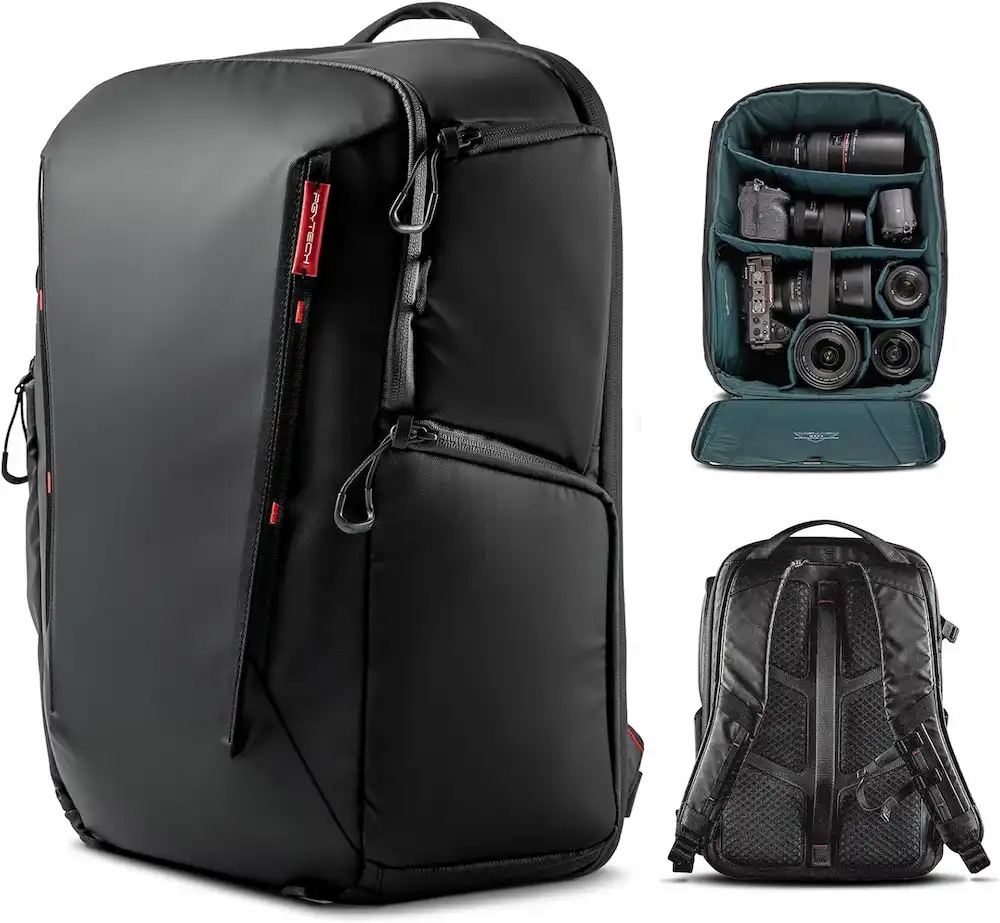
1. Top Pick: PGYTECH OneMo Lite Camera Backpack 22L
The PGYTECH OneMo Lite is arguably the most versatile mirrorless camera bag on the market today. Designed specifically for the hybrid shooter who carries everything from a Sony Alpha body to a DJI Mavic drone, this 22L pack strikes a perfect balance between a professional gear hauler and a sleek weekend bag.
Why It Wins
The OneMo Lite stands out due to its “scientific” interior planning. Unlike many bags that offer a simple hollow space, PGYTECH uses high-density modular dividers that allow you to customize the layout for specific lens lengths and gimbal shapes. Its side-access panel is a game-changer for travel, allowing you to swing the bag around and grab your camera without ever putting the pack on the ground.
Features & Performance
- Capacity: 22L, ideal for a mirrorless body and 3–4 lenses.
- Build: Splash-proof, wear-resistant polyester that holds up in light rain.
- Security: Features an anti-theft YKK zipper and a hidden pocket designed specifically for an Apple AirTag.
- Comfort: The “Airy” back panel system uses pressure-relieving foam to keep you cool during long walks.
Pros:
- Incredible value-to-feature ratio.
- Side quick-access is exceptionally smooth.
- Dedicated battery pockets with manual “charge level” indicators.
- Compact enough to fit under most airline seats.
Cons:
- The dividers are slightly thinner than those in premium “hard-shell” bags.
- The 22L size may be tight for photographers carrying large 70-200mm f/2.8 lenses.
2. Best for Build Quality: Peak Design Everyday Backpack Zip 20L
If aesthetics and engineering are your primary concerns, the Peak Design Everyday Backpack Zip is the gold standard. Peak Design pioneered the modern camera bag movement, and the “Zip” version of their classic backpack offers a cleaner, more streamlined silhouette that doesn’t scream “expensive camera gear inside.”
The “FlexFold” Advantage
The heart of this mirrorless camera bag is the FlexFold divider system. Inspired by origami, these dividers can be snapped into different configurations to create shelves or sub-compartments. This allows you to stack lenses vertically while still maintaining side access from both the left and right sides of the bag.
Features & Performance
- Access: 270-degree ultra-durable #8 zip allows access from the top and both sides.
- Materials: 100% recycled 400D nylon canvas shell that is DWR impregnated and double poly-coated.
- Expansion: While it lacks a roll-top, it features external carry straps for tripods or jackets.
Pros:
- Unmatched lifetime warranty and build quality.
- Side access from both sides makes it great for lefties and righties.
- Environmentally conscious, recycled materials.
Cons:
- Premium price point.
- The straps are relatively thin; they are designed for urban use rather than 10-mile hikes.
3. Best for Urban Style: Wandrd PRVKE 21L (V4)
For the traveler who wants a bag that looks like a high-end commuter pack, the Wandrd PRVKE 21L is the top contender. It is a favorite among YouTubers and street photographers because it blends a rugged “tarpaulin” aesthetic with a highly functional roll-top design.
Expandability for Travel
The PRVKE is unique because of its roll-top. While the camera cube handles your mirrorless bodies and lenses, the top section can expand by an extra 5 liters. This is perfect for stashing a sweater, a rain shell, or snacks—items that often don’t fit in dedicated camera compartments.
Features & Performance
- Modular: Requires a “Camera Cube” insert (usually sold in the Photography Bundle).
- Weatherproof: The tarpaulin and 1680D ballistic nylon are essentially waterproof even without a rain cover.
- Access: Side access for the camera and a full clamshell opening for easy packing.
Pros:
- The most stylish bag in this lineup.
- Roll-top provides excellent flexibility for non-gear items.
- Includes a hidden passport/wallet pocket against your back.
Cons:
- The “tarpaulin” material can show scuffs over time.
- Can feel slightly heavy even when empty due to the thick materials.
4. Best Budget Pick: Lowepro Fastpack BP 250 AW III
Lowepro has been the industry leader for decades, and the Fastpack BP 250 AW III is the refined result of years of feedback. This bag is designed for the “hybrid” traveler—someone who needs half the bag for camera gear and the other half for personal items like a laptop, headphones, and a change of clothes.
QuickDoor Technology
The “QuickDoor” system allows you to partially unzip the bag for sling-style access or fully unzip it to lay it flat. It’s a pragmatic approach to the mirrorless camera bag category, ensuring you don’t have to choose between speed and organizational visibility.
Features & Performance
- Protection: Includes the “All Weather” (AW) cover for extreme downpours.
- Laptop Sleeve: Fits up to a 13-inch laptop (though some 14-inch models fit snugly).
- Weight: One of the lightest professional bags in its class.
Pros:
- Very affordable compared to boutique brands.
- Excellent 50/50 split between gear and personal items.
- CradleFit laptop pocket protects against impact when you set the bag down.
Cons:
- Aesthetic is very “utilitarian” and looks like a camera bag.
- Waist strap is a simple webbing strap rather than a padded belt.
5. Best for Outdoor Adventure: Shimoda Action X30 V2
When your travel involves mountains, dirt, and unpredictable weather, the Shimoda Action X30 V2 is the only choice. This is not just a camera bag; it is a technical mountain pack that happens to hold cameras.
Human-Centric Design
Shimoda’s greatest innovation is their adjustable harness. You can move the shoulder straps up or down to fit your torso height perfectly. They also offer “Women’s Specific” straps, making it one of the most inclusive and comfortable bags for female photographers.
Features & Performance
- Core Units: Uses a modular “Core Unit” system; you choose how much camera space you need.
- Durability: Made from Carbonate Ether coated nylon, which is incredibly tear-resistant.
- Hydration: Features a dedicated sleeve for a water bladder, a rarity in camera packs.
Pros:
- The most comfortable carrying system for heavy loads.
- Front-panel pockets are large enough for gimbals or tripods.
- Expandable roll-top and helmet holder.
Cons:
- Most expensive option on the list.
- Requires purchasing Core Units separately, which adds to the cost.
Comprehensive Buyer’s Guide: Choosing Your Mirrorless Camera Bag
When investing in a mirrorless camera bag, you aren’t just buying a container; you’re buying insurance for your gear and comfort for your body. Here is what you must consider before clicking “buy.”
1. The Access Philosophy
Travel photography is all about the moment. If it takes you 60 seconds to take your bag off and dig through dividers, you’ve missed the shot.
- Side Access: Best for urban environments. Allows you to “sling” the bag to your front.
- Rear Access: Best for security. Since the zipper is against your back, no one can open the bag while you are wearing it.
- Top Access: Best for long lenses or when you’re working out of the bag like a mobile station.
2. Weight and Dimensions
A common mistake is buying a bag that is too big. Most mirrorless systems (like the Sony A7 series or Fujifilm X-T series) are compact. A 20L to 25L bag is usually the “sweet spot” for travel. It ensures the bag remains “Carry-On” compatible for almost every airline worldwide, including budget carriers.
3. Protection vs. Weight
Look for materials like 840D Nylon or Polyester with PU coating. While leather looks great, it is heavy and poor in the rain. Modern synthetics offer the best protection. Additionally, ensure the bag has “CradleFit” or suspended laptop sleeves; this prevents your computer from hitting the ground when you drop the bag.
4. Customization and Dividers
Not all dividers are created equal. High-density EVA foam is the industry standard. Look for “origami-style” dividers (like those in Peak Design or PGYTECH) that allow you to create “floors” in your bag. This prevents your lenses from knocking against each other during transit.
5. Comfort and Breathability
Travel involves thousands of steps. A bag with a poor back panel will leave you drenched in sweat. Look for “Air Mesh” or “Air Tunnel” designs that allow airflow between your back and the pack. If you plan on carrying more than 15 lbs of gear, a padded waist belt is mandatory to shift the weight from your shoulders to your hips.
Final Verdict: Which Bag is Right for You?
Choosing the best mirrorless camera bag depends entirely on your travel style:
- For the Tech-Savvy Traveler: Get the PGYTECH OneMo Lite. Its battery indicators, AirTag pocket, and gimbal-specific storage make it the smartest choice for 2025.
- For the Urban Minimalist: The Peak Design Everyday Zip offers the cleanest look and the best engineering for city commutes.
- For the Weekend Adventurer: The Wandrd PRVKE offers the best mix of style and expandable “extra space” for non-photography gear.
- For the Budget-Conscious: You cannot beat the Lowepro Fastpack. It is a reliable, time-tested workhorse that won’t break the bank.
- For the Rugged Explorer: If you are hitting the trails, the Shimoda Action X30 is the only bag that provides the ergonomics required for all-day hiking.
“DISCLOSURE: This post contains affiliate links. If you make a purchase through one of our links, we may earn a commission at no extra cost to you.”