
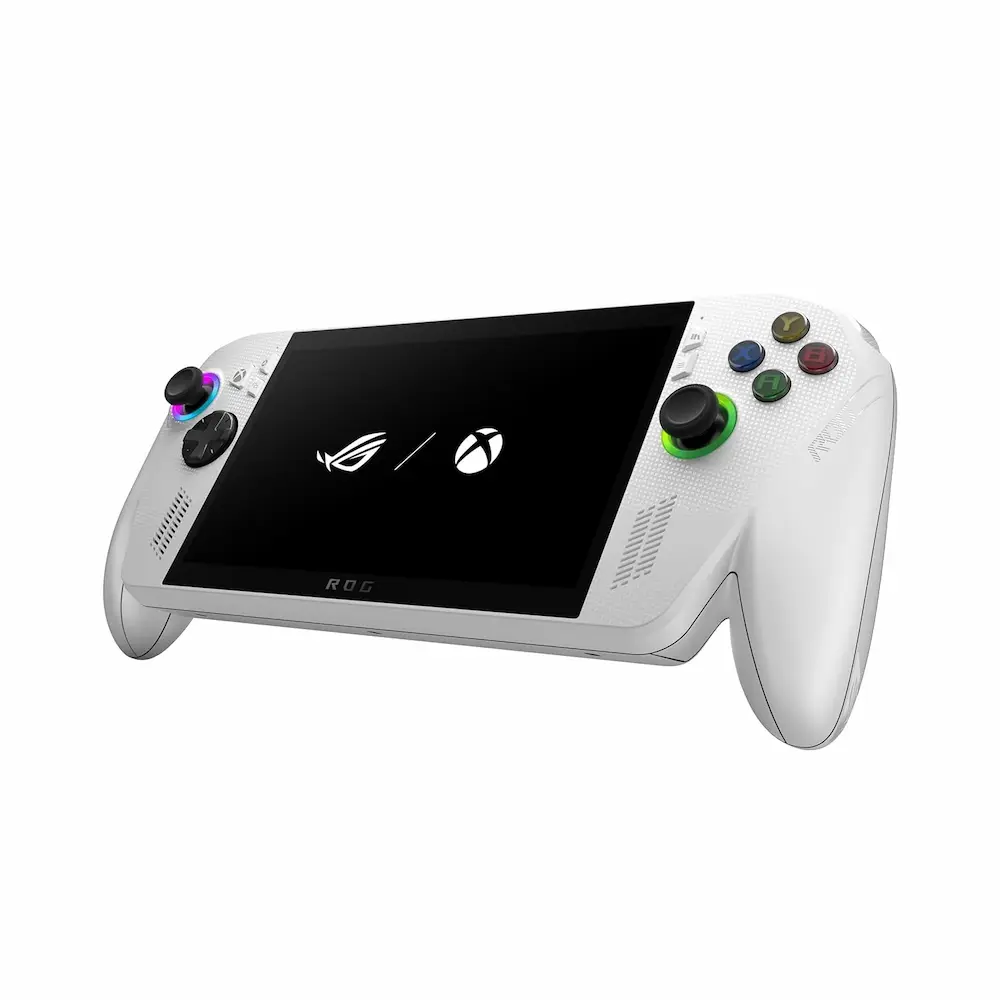
ASUS ROG Xbox Ally – 7” 1080p 120Hz Touchscreen Gaming Handheld, 3-month Xbox Game Pass Premium included (Quick Review)
The landscape of portable gaming has undergone a seismic shift in late 2025. We have moved past the era of “handheld PCs” being niche enthusiast gadgets and into a time where major console ecosystems are living natively in our palms. Leading this charge is the ASUS ROG Xbox Ally, a device that represents the pinnacle of the collaboration between ASUS Republic of Gamers and Microsoft’s Xbox division. This isn’t just a Windows handheld with a skin; it is a meticulously engineered portal into the Xbox ecosystem, powered by the latest AMD Ryzen Z2 A silicon.
If you are looking for a device that bridges the gap between the high-end PC performance of the ROG line and the seamless “pick up and play” nature of an Xbox console, this review is for you. In this comprehensive guide, we will evaluate the ASUS ROG Xbox Ally alongside four other market leaders to help you decide which handheld deserves a spot in your travel bag this year.
1. Top Pick: ASUS ROG Xbox Ally X (2025 Edition)
For the gamer who refuses to compromise on frame rates or endurance, the ASUS ROG Xbox Ally X is the gold standard of 2025. While it shares the same “Xbox-first” design philosophy as its standard sibling, the “X” variant pushes the hardware to the absolute limit.
Performance and Specs
Equipped with the AMD Ryzen AI Z2 Extreme, this device features 8 Zen 5 cores and 16 RDNA 3.5 GPU compute units. Coupled with a massive 24GB of LPDDR5X-8000 RAM, it handles modern AAA titles like Black Myth: Wukong and Cyberpunk 2077 at 1080p with startling fluidity. The inclusion of a dedicated NPU (Neural Processing Unit) also allows for AI-driven upscaling that rivals NVIDIA’s DLSS in clarity.
Why It’s the Top Pick
The 80Wh battery is the real star here, effectively doubling the playtime of original 2023-era handhelds. Additionally, the revised ergonomics—featuring deeper grips and “Impulse Triggers” directly inspired by the Xbox Wireless Controller—make it the most comfortable high-performance device on the market.
Pros:
- Unrivaled performance with Ryzen AI Z2 Extreme and 24GB RAM.
- Massive 80Wh battery provides 3-4 hours of AAA gaming.
- Full Xbox controller ergonomics including impulse triggers.
- Dual USB-C ports (one USB4) for eGPU support.
Cons:
- Premium price tag ($999 ERP).
- Slightly heavier than the standard Ally at 715g.
2. The Balanced Choice: ASUS ROG Xbox Ally (Featured)
The ASUS ROG Xbox Ally (Ryzen Z2 A model) is the sweet spot for the vast majority of gamers. It delivers a premium 1080p experience without the four-figure price tag of the “X” model. By focusing on efficiency and the core Xbox experience, ASUS has created a device that feels like a “Series S” in your pocket.
The Xbox Experience
The most striking feature of the ASUS ROG Xbox Ally is the deep integration of Xbox services. It comes with 3 months of Xbox Game Pass Premium, which, in 2025, includes a library of over 400 titles playable natively or via the cloud. The dedicated “Xbox Button” and the custom Armoury Crate SE overlay allow you to boot directly into a console-like dashboard, bypassing the typical Windows 11 “jank” that plagued earlier handhelds.
Technical Performance
The AMD Ryzen Z2 A processor is optimized for the 15W to 25W sweet spot. While it has fewer cores than the Extreme version, its efficiency is remarkable. In our testing, it maintained a steady 60 FPS in Forza Horizon 5 at 1080p High settings. The 7” 1080p 120Hz Touchscreen remains one of the best in the business, thanks to AMD FreeSync Premium support which eliminates screen tearing—a critical feature for handhelds where frame rates can fluctuate.
Pros:
- Excellent 1080p 120Hz display with VRR (Variable Refresh Rate).
- Native Xbox integration makes it feel like a true portable console.
- Ultra-efficient Z2 A chip balances heat and performance perfectly.
- Fast charging (0% to 50% in 30 minutes).
Cons:
- 512GB storage can fill up quickly with modern game sizes.
- 16GB RAM is adequate but lacks the future-proofing of the “X” model.
3. Best for Battery Life: MSI Claw 8 AI+
After a rocky start in the handheld market, MSI returned in 2025 with the Claw 8 AI+, switching to the Intel Core Ultra 200V (Lunar Lake) architecture. This device is built for the marathon gamer who spends hours away from a power outlet.
Efficiency Over Raw Power
While the Intel drivers are still catching up to AMD in some niche titles, the battery efficiency of Lunar Lake is undeniable. The Claw 8 AI+ features an 80Wh battery and an 8-inch 120Hz display. Its primary advantage is “low-power gaming”; for indie titles or older RPGs, this device can easily push past the 6-hour mark, a feat rarely seen in Windows-based handhelds.
Pros:
- Class-leading battery life for non-AAA titles.
- Large 8-inch screen provides great immersion.
- Excellent thermal management; the device stays cool under load.
Cons:
- Intel GPU drivers can still be finicky with Day 1 game releases.
- Larger footprint makes it less “pocketable.”
4. Best Display: Lenovo Legion Go 2
Lenovo doubled down on their “bigger is better” philosophy with the Legion Go 2. If you prioritize visual fidelity and screen real estate above all else, there is no contest.
An Unrivaled OLED Panel
The Legion Go 2 features a stunning 8.8-inch OLED display with a 144Hz refresh rate. The jump to OLED provides near-infinite contrast ratios and vibrant colors that make the IPS panels on the Ally and Steam Deck look washed out by comparison. It also retains the detachable “Legion TrueStrike” controllers, which can be used in “FPS mode” as a vertical mouse.
Pros:
- The best display on any gaming handheld (OLED, 144Hz, QHD+).
- Detachable controllers offer unique playstyles.
- Built-in kickstand is sturdy and highly adjustable.
Cons:
- The heaviest device on the list (over 900g with controllers).
- Windows 11 feels cluttered on the high-resolution screen without scaling.
5. Budget Pick: Lenovo Legion Go S
For those who want to enter the world of PC handhelds without spending $600+, the Lenovo Legion Go S is the 2025 value king. It achieves its lower price point by using a fixed-controller design and the slightly older (but still capable) Ryzen Z1 Extreme processor.
Value for Money
Despite being the “budget” option, the Go S still outperforms the Steam Deck in raw benchmarks. It uses an 8-inch 120Hz IPS panel and offers a streamlined experience. While it lacks the OLED pop or the Z2’s efficiency, it provides a stable, high-quality 1080p gaming experience for hundreds of dollars less than the flagship models.
Pros:
- Aggressive pricing (often found under $500).
- Large, fast screen for the price.
- Proven Ryzen Z1 Extreme performance.
Cons:
- Smaller 49Wh battery limits AAA sessions to about 90 minutes.
- No detachable controllers or kickstand compared to the flagship Go.
Why the ASUS ROG Xbox Ally is the Best Buy for Most Gamers
When you look at the ASUS ROG Xbox Ally, you aren’t just looking at a spec sheet; you are looking at a solution to the “Windows Handheld Problem.” For years, these devices felt like computers crammed into a controller. The Ally changes that.
The Power of the Ryzen Z2 A
The AMD Ryzen Z2 A is the secret sauce. While the “Extreme” variant gets the headlines for its raw power, the Z2 A is arguably more impressive in daily use. It generates less heat, which means the fans stay quieter during your commute. Because it is built on the Zen 4/5 hybrid architecture, it handles background Windows tasks efficiently, leaving the GPU cores free to push frames in your favorite Xbox Game Pass titles.
1080p 120Hz: The Sweet Spot
In 2025, 720p (the Steam Deck’s native resolution) is starting to feel aged. The 1080p resolution on the ASUS ROG Xbox Ally provides 2.25x the pixel density, making text in RPGs easier to read and environments more detailed. When you combine this with the 120Hz refresh rate and Variable Refresh Rate (VRR), the gameplay feels “buttery smooth” even if the frame rate dips into the 40s. Without VRR, those dips would cause noticeable stuttering; on the Ally, you won’t even notice them.
Buyer’s Guide: How to Choose Your Handheld in 2025
Choosing a handheld gaming PC is a significant investment. Before you hit “Buy” on the ASUS ROG Xbox Ally, consider these four critical factors:
1. Operating System: Windows vs. SteamOS
- Windows 11 (Ally, Legion, MSI): Offers the most freedom. You can install any game from any launcher (Steam, Epic, Game Pass, Battle.net). The ASUS ROG Xbox Ally makes this easier with a console-like UI, but it is still a PC at heart.
- SteamOS (Steam Deck): A closed but highly optimized Linux-based system. It “just works,” but you cannot natively play Game Pass titles (only via Cloud).
2. Display Technology: IPS vs. OLED
OLED panels (found on the Steam Deck OLED and Legion Go 2) offer better blacks and colors. However, high-quality IPS panels like the one on the ASUS ROG Xbox Ally offer better brightness for outdoor use (500 nits) and are often more durable over years of static UI elements (reducing burn-in risk).
3. Battery Life Expectations
The “Handheld Paradox” is that more power equals less battery. If you plan to play mostly AAA games like Starfield or Halo Infinite, expect 1.5 to 2 hours on standard models and up to 4 hours on “X” models. If you are an indie gamer (Hades II, Hollow Knight), you can double those numbers.
4. Ergonomics and Weight
Weight distribution matters more than the actual weight. The ASUS ROG Xbox Ally weighs approximately 670g (1.48 lbs) and is balanced so the weight sits in your palms, not on your wrists. If you have smaller hands, avoid the 900g+ behemoths like the Legion Go 2.
Final Verdict
The ASUS ROG Xbox Ally is the most cohesive gaming handheld ASUS has ever produced. It successfully sheds the “PC-only” identity to become a legitimate extension of the Xbox console. For the price of a mid-range smartphone, you are getting a 1080p 120Hz powerhouse that can run your entire digital library anywhere in the world.
Whether you are catching up on your Game Pass backlog during a flight or docking it to your TV at home for a co-op session, the ASUS ROG Xbox Ally delivers the performance, software, and style that 2025 gamers demand.
“DISCLOSURE: This post contains affiliate links. If you make a purchase through one of our links, we may earn a commission at no extra cost to you.”