
Maxfree Laptop Screen Extender: Ultimate 2025 Review & Buyer’s Guide
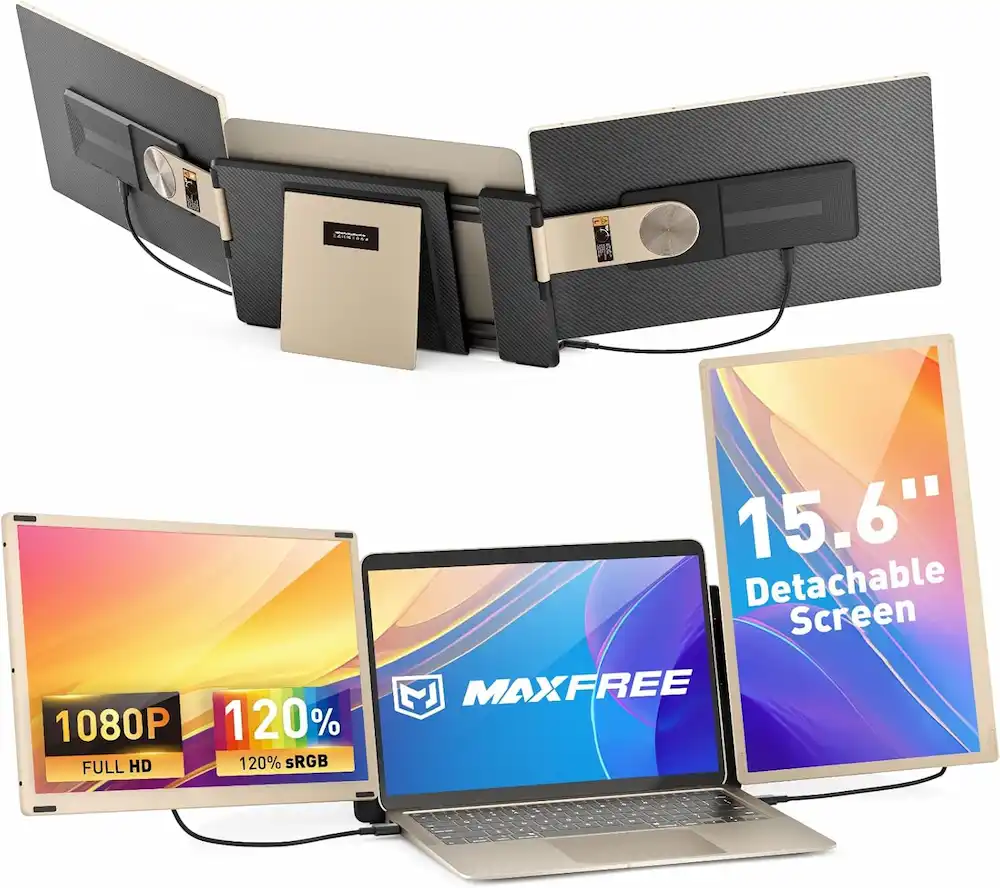
In the modern era of remote work and digital nomadism, the traditional single-screen laptop often feels like a bottleneck for productivity. If you have ever found yourself constantly alt-tabbing between spreadsheets, Zoom calls, and Slack, you know the frustration. The Maxfree Laptop Screen Extender, 15.6” Dual Monitor for Laptop 13″-17.3″, FHD 1080P is designed to solve this exact problem, promising to turn any standard laptop into a high-powered triple-screen workstation in seconds.
Whether you are a software developer, a day trader, or a creative professional, the ability to expand your digital real estate on the go is no longer a luxury—it is a necessity. In this comprehensive review, we evaluate the Maxfree S6 and four other top-tier competitors to help you find the perfect portable display for your specific workflow.
5 Best Laptop Screen Extenders of 2025: Ranked & Reviewed
The market for portable monitors has exploded, and choosing the right one requires looking at weight, connectivity, and panel quality. Here are our top five picks for 2025.
1. Maxfree S6 Laptop Screen Extender (Top Pick)
The Maxfree Laptop Screen Extender, 15.6” Dual Monitor for Laptop 13″-17.3″, FHD 1080P stands out as our top pick because it offers the most seamless balance of screen size and stability. Unlike 14-inch models that can feel cramped, the 15.6-inch IPS panels provide a desktop-like experience. Its unique wide-leg kickstand is a game-changer, as it supports the weight of the dual screens without putting excessive torque on your laptop’s hinges.
- Pros:
- Massive 15.6-inch dual screens with 1080P resolution and 120% sRGB color gamut.
- Plug-and-play functionality via a single USB-C cable (for compatible laptops).
- Innovative 11 display modes, including vertical and stacked configurations.
- Cons:
- At roughly 5 lbs, it is heavier than single-monitor alternatives.
- Not compatible with base M1/M2/M3 MacBook chips (requires Pro/Max chips for dual-output).
2. KYY K3 Portable Monitor (Budget Pick)
If you need extra screen space but are working with a tighter budget, the KYY K3 is a stellar entry-level choice. It provides a crisp 15.6-inch FHD display for a fraction of the cost of triple-monitor setups. While it doesn’t “clamp” onto your laptop like the Maxfree, its lightweight design makes it incredibly easy to slide into a backpack.
- Pros:
- Extremely affordable while maintaining a high-quality IPS panel.
- Ultra-slim profile and weighs only 1.7 lbs.
- Excellent connectivity with dual USB-C and Mini-HDMI ports.
- Cons:
- Only adds one additional screen rather than two.
- The included smart cover/stand can be a bit flimsy on uneven surfaces.
3. Mobile Pixels Trio Max (Best for Versatility)
The Mobile Pixels Trio Max is famous for its magnetic attachment system. This allows the screens to slide out from behind your laptop, making it ideal for working in tight spaces like airplane trays or coffee shop counters.
- Pros:
- Magnets allow the screens to stay attached to the laptop lid even when moving.
- 180-degree rotation is perfect for “Presentation Mode” to show clients your work.
- Highly durable build quality.
- Cons:
- The adhesive magnets can be difficult to remove or reposition.
- Screen brightness (250 nits) is slightly lower than the Maxfree’s 300 nits.
4. Asus ROG Strix XG17AHPE (Best for Gaming & Refresh Rate)
For the “Work Hard, Play Hard” crowd, this Asus monitor is a beast. While most portable extenders are capped at 60Hz, this unit boasts a 240Hz refresh rate, making it the premier choice for gamers and video editors who need fluid motion.
- Pros:
- Incredible 240Hz refresh rate and 3ms response time.
- Built-in battery provides up to 3 hours of use without draining your laptop.
- Includes a tripod-style stand for better ergonomics.
- Cons:
- Very expensive compared to standard productivity monitors.
- Larger 17.3-inch size may not fit in standard 15-inch laptop bags.
5. Duex Plus (Best for Battery Life & Portability)
The Duex Plus is the smaller, more efficient cousin of the Trio. It is optimized for energy efficiency, ensuring that your laptop battery doesn’t die halfway through a flight while powering the second screen.
- Pros:
- Sophisticated power-saving mode preserves your laptop’s charge.
- Compact 13.3-inch size is perfect for Ultrabooks and MacBook Airs.
- Intuitive auto-rotation software.
- Cons:
- The smaller screen size is less ideal for detailed spreadsheet work.
- Uses a plastic casing which feels less premium than the Maxfree’s carbon-fiber finish.
Why the Maxfree Laptop Screen Extender is a Productivity Powerhouse
When analyzing the Maxfree Laptop Screen Extender, 15.6” Dual Monitor for Laptop 13″-17.3″, FHD 1080P, the first thing you notice is the “300% efficiency” claim. While that sounds like marketing speak, for professionals managing complex workflows, it is surprisingly accurate.
The S6 model utilizes a magnetic structure that allows the two 15.6-inch screens to be detached or combined in 11 different DIY methods. You can have one screen in portrait mode for reading code or long documents, while the other remains in landscape for your main workspace. With 300 nits of brightness and an anti-glare coating, it remains highly usable in bright office environments.
Buyer’s Guide: How to Choose the Right Laptop Screen Extender
Selecting an extender isn’t just about picking the biggest screen. You must ensure the hardware is compatible with your specific machine and lifestyle.
1. Compatibility and Ports
The most common mistake buyers make is assuming their USB-C port supports video.
- USB-C (DisplayPort Alt Mode): This allows a single cable to handle both power and data.
- HDMI + USB-A: If your laptop is older, you will likely need two cables per monitor—one for the image and one for power.
- MacBook Limitations: Remember that standard Apple M1, M2, and M3 chips (non-Pro/Max) natively support only one external display. You may need a DisplayLink adapter if you want to use a triple-screen setup with these specific laptops.
2. Screen Size and Weight
If you are a frequent flyer, every ounce matters. A 13-inch or 14-inch extender like the Duex Plus is better for tray tables. However, if you are a “digital nomad” who sets up in a co-working space for 8 hours a day, the 15.6-inch Maxfree Laptop Screen Extender provides a much more comfortable viewing experience and reduces eye strain.
3. Display Quality (IPS vs. TN)
Always look for IPS (In-Plane Switching) panels. TN panels are cheaper but have terrible viewing angles; if you aren’t looking at them perfectly straight, the colors will look washed out. Since screen extenders are often angled toward the user, IPS is a non-negotiable requirement for a clear, professional-looking image.
4. Stability and Mounting
There are two main styles:
- Attached/Clamped: These hook onto your laptop. They are great for laps but can be heavy.
- Freestanding/Kickstand: These sit next to your laptop. They are more stable and safer for your laptop’s screen hinges, which is why we recommend the Maxfree S6 design.
Final Verdict: Is the Maxfree 15.6″ Extender Worth It?
The Maxfree Laptop Screen Extender, 15.6” Dual Monitor for Laptop 13″-17.3″, FHD 1080P is a top-tier investment for anyone who takes their mobile productivity seriously. It solves the primary complaints of earlier portable monitors—specifically stability and screen real estate—by providing a robust, large-format triple-screen experience.
“DISCLOSURE: This post contains affiliate links. If you make a purchase through one of our links, we may earn a commission at no extra cost to you.”